
Pitch Invasion: How the USA Changed Soccer
2 x 58' - BBC ONE NI (2026)
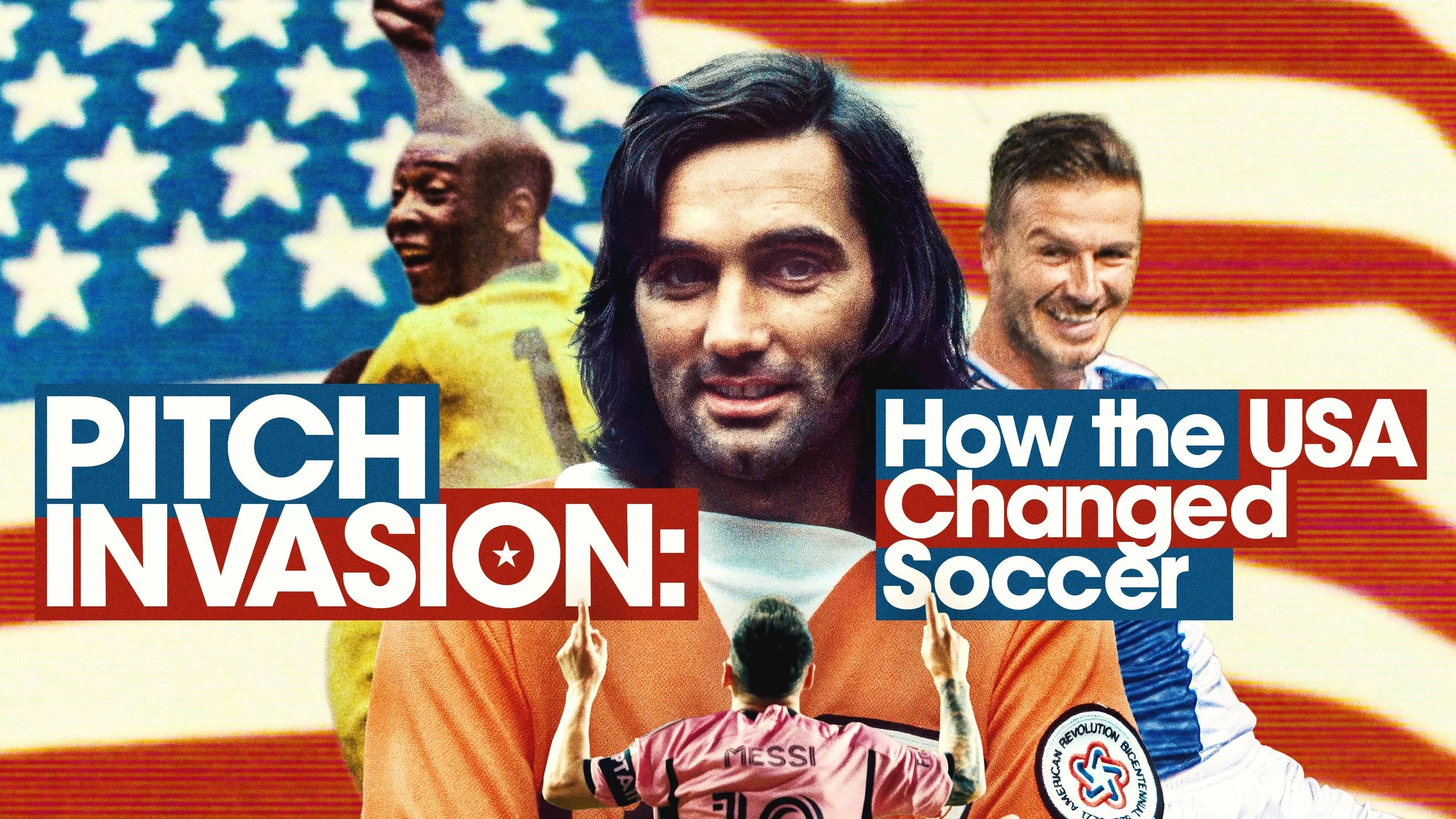
It was star-spangled soccer. This is the story of how the modern game of football was born in the USA. From its fledgling beginnings with the North American Soccer League (NASL) America didn’t just grow the game, it helped change football forever.
By the late 1970s the NASL was booming with superstar players such as Pele, Best, Cruyff, Marsh and Beckenbauer entertaining packed stadiums. But, while the NASL would collapse by the early 1980s, children continued to play the sport. And the college system would help fuel the rise of the US Women’s National Team who would go on to World Cup and Olympic glory, transforming the women’s game globally. In the men’s game, the new MLS would see a resurgence with the arrival of Beckham and today’s superstars such as Messi.
A new two-part BBC Northern Ireland series, Pitch Invasion: How The USA Changed Soccer, kicks-off by looking at how the NASL was a game changer for football. American fans wanted to be entertained and soccer was given a makeover in typical US style with mascots, family friendly stadiums, cheerleaders and celebrity players sporting their names on the back of their shirts.
It was leagues ahead of English football in the ’70s with its crumbling stadiums, hooliganism and grim atmosphere.
Narrated by Patrick Kielty, the series features former players who enjoyed careers in the NASL including Harry Rednapp, Rodney Marsh, Bruce Grobbelaar and Jimmy Nicholl. The series also features Pelé’s manager, Rose Ganguzza, former England goalkeeper Rachel Brown-Finnis, comedians Maisie Adam and Shane Todd alongside contributions from authors and historians of American soccer.
EPISODE 1
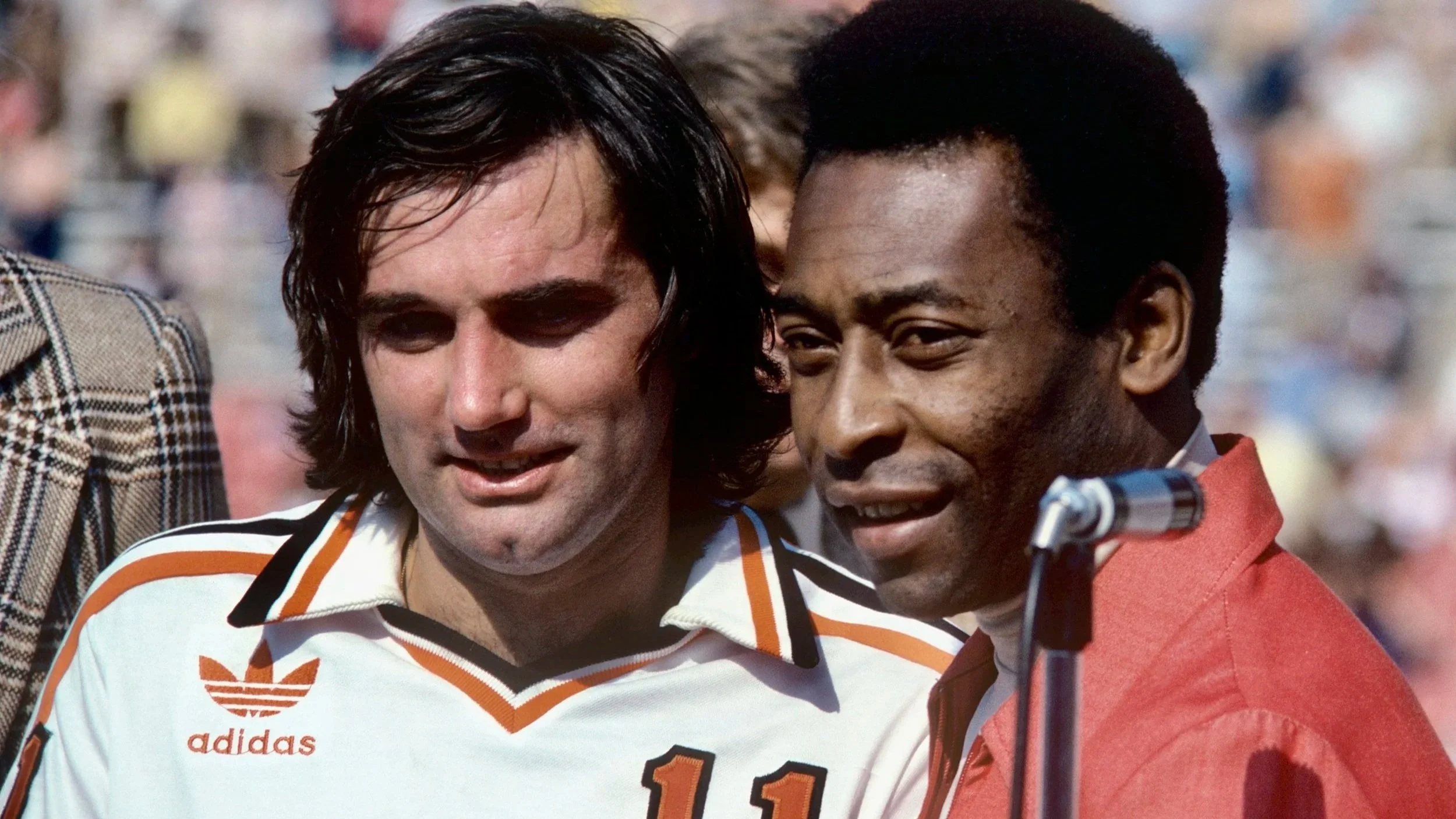
The 1966 World Cup Final between England and West Germany sparked an unlikely soccer revolution in the USA. By the mid-1970s, the North American Soccer League had grown to more than twenty teams, but soccer still struggled for attention in a country dominated by baseball and American football. The NASL needed star power, so the New York Cosmos signed Pelé on what was then the biggest contract in sporting history.
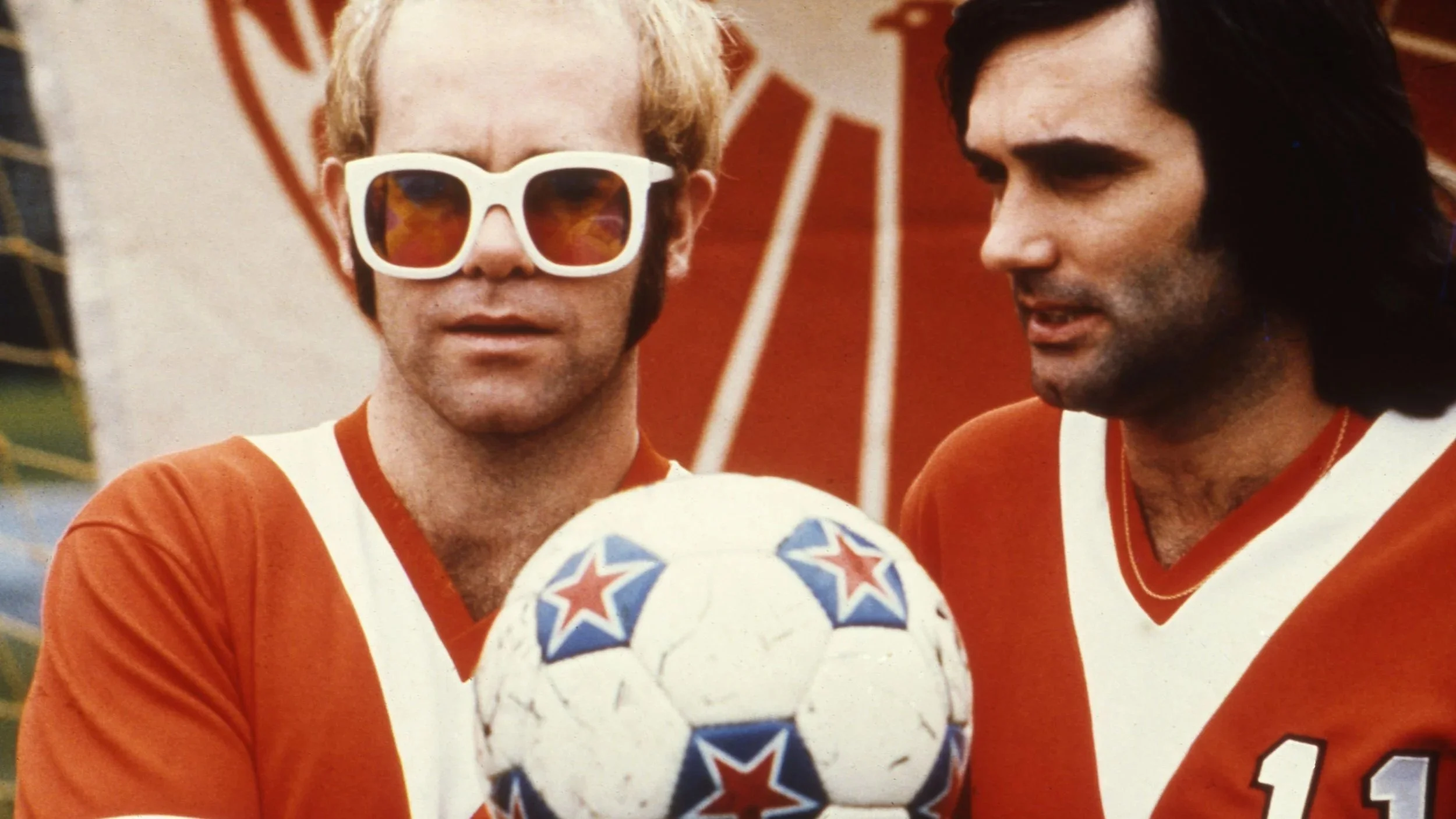
At the same time, after falling out with Manchester United, George Best saw the USA as a chance to reinvent himself and the game. In a never-before-seen 2001 interview, Best describes the league as “a fresh start” after signing for Elton John’s Los Angeles Aztecs in 1976.
The dull presentation of football was also turned on its head by typical American razzmatazz with fireworks, cheerleaders and mascots. Former USA goalkeeper Brad Friedel explains “This is the American culture, they expect to be entertained.”
While English football in the 1970s was associated with crumbling stadiums, hooliganism and a grim atmosphere, America was reshaping football culture with tailgating, all-seater stadiums and family-friendly crowds. Dennis Tueart was astonished by the party atmosphere at the Cosmos and that 42% of the fans were female.
America was also a land of opportunities for ambitious players like Harry Redknapp who recalls, “I started coaching there…it was a great experience”. Meanwhile, Pelé dedicated himself to developing future generations through soccer camps that gave girls equal opportunities to play.
By the late 1970s, soccer was booming in the USA. Packed stadiums and celebrity signings like Pele and Best helped transform the game into an entertainment spectacle. Riding that wave, the NASL boldly predicted global dominance by 1985, but sadly it was not to be.
EPISODE 2
By the late 1970s, soccer was booming and the NASL had brought showbiz swagger to the American game. Players became celebrity superstars, flying to matches in private jets and partying in nightclubs. Former Tampa Bay Rowdies midfielder Rodney Marsh recalls arriving in America with long hair just as pop star Peter Frampton invested in the Philadelphia Fury. “He had the same long hair as me,” laughs Marsh.
American fans struggled to understand offside and were baffled by scoreless draws, so matches were settled by dramatic shoot-outs. Former Seattle Sounders coach Harry Redknapp explains, “I still think that is a better idea than penalties.” The NASL’s radical ideas alarmed FIFA, which threatened to ban players from international football.
American soccer was a marketeer’s dream, with clubs like Dallas Tornado using extravagant gimmicks to excite fans. The NASL also led the way on live TV coverage. “Who thought that would be groundbreaking?” says former England goalkeeper Rachel Brown-Finnis.
George Best, now with the San Jose Earthquakes, showcased his genius one last time before returning home. “Things weren’t going too well at home and I had begun drinking really heavily,” reveals Best in an unseen 2001 interview.
But the boom could not last and by 1984 the NASL was bust. Yet across America the game had taken root. The college system helped fuel the rise of the US Women’s National Team, whose World Cup and Olympic triumphs transformed women’s football globally.
David Beckham’s arrival in MLS in 2007 reignited the men’s game before Lionel Messi took Inter Miami and MLS to new heights in 2023. Soccer in the USA has always been driven by entertainment - and that appetite for spectacle continues to shape the future of the game.